Why combine Pamukkale and Hierapolis in one epic trip? Because nowhere else in Turkey blends a
living natural wonder—the white travertine terraces of Pamukkale—with a
UNESCO-listed ancient city—Hierapolis—so seamlessly. You’ll walk barefoot along mineral-rich pools, then step into a Roman-time metropolis crowned by a monumental theatre, grand avenues, and an immense necropolis. This long-form, SEO-optimized guide delivers everything you need: routes, best times, photography tips, hot-air balloon info, on-the-ground etiquette, and smart, bookable itineraries. Ready to tailor your day? Browse popular options as you read:
Pamukkale Tours,
Pamukkale Day Tours,
Hierapolis & Travertines packages, or the flexible
Pamukkale Private Tours.
Check out our new tour here:Private 2 Days Ephesus and Pamukkale Tour From Istanbul
Overview: Why Pamukkale & Hierapolis Matter
Pamukkale (literally “Cotton Castle”) is famed for blinding-white limestone terraces formed by calcium-rich thermal waters. Just uphill sprawls
Hierapolis, an ancient Greco-Roman city of healing and worship. The two are listed together by UNESCO for their outstanding universal value—nature and culture intertwined.
Unlike many archaeological sites, Hierapolis lives in the present: bath complexes, colonnaded streets, gates, temples, a vast necropolis, and an astonishing theatre are linked by easy footpaths.
In one day you can contrast warm, barefoot steps in Pamukkale’s pools with the cool stone of a Roman stage where emperors once watched performances. Want a guided, no-stress day? Explore curated programs while you read:
Pamukkale Day Trip from Istanbul,
From Kuşadası & Selçuk,
From İzmir Hotels.
Top Highlights: What Not to Miss
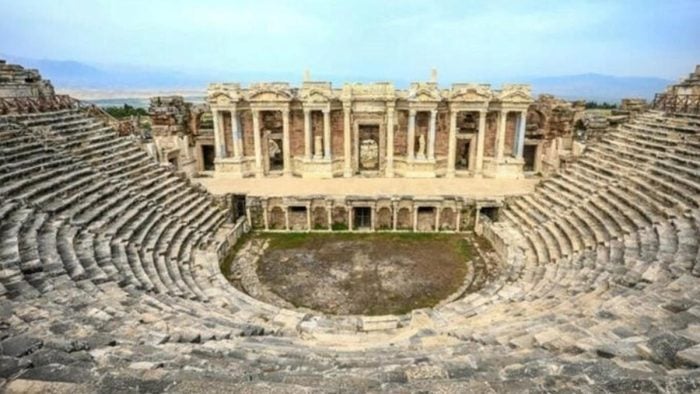
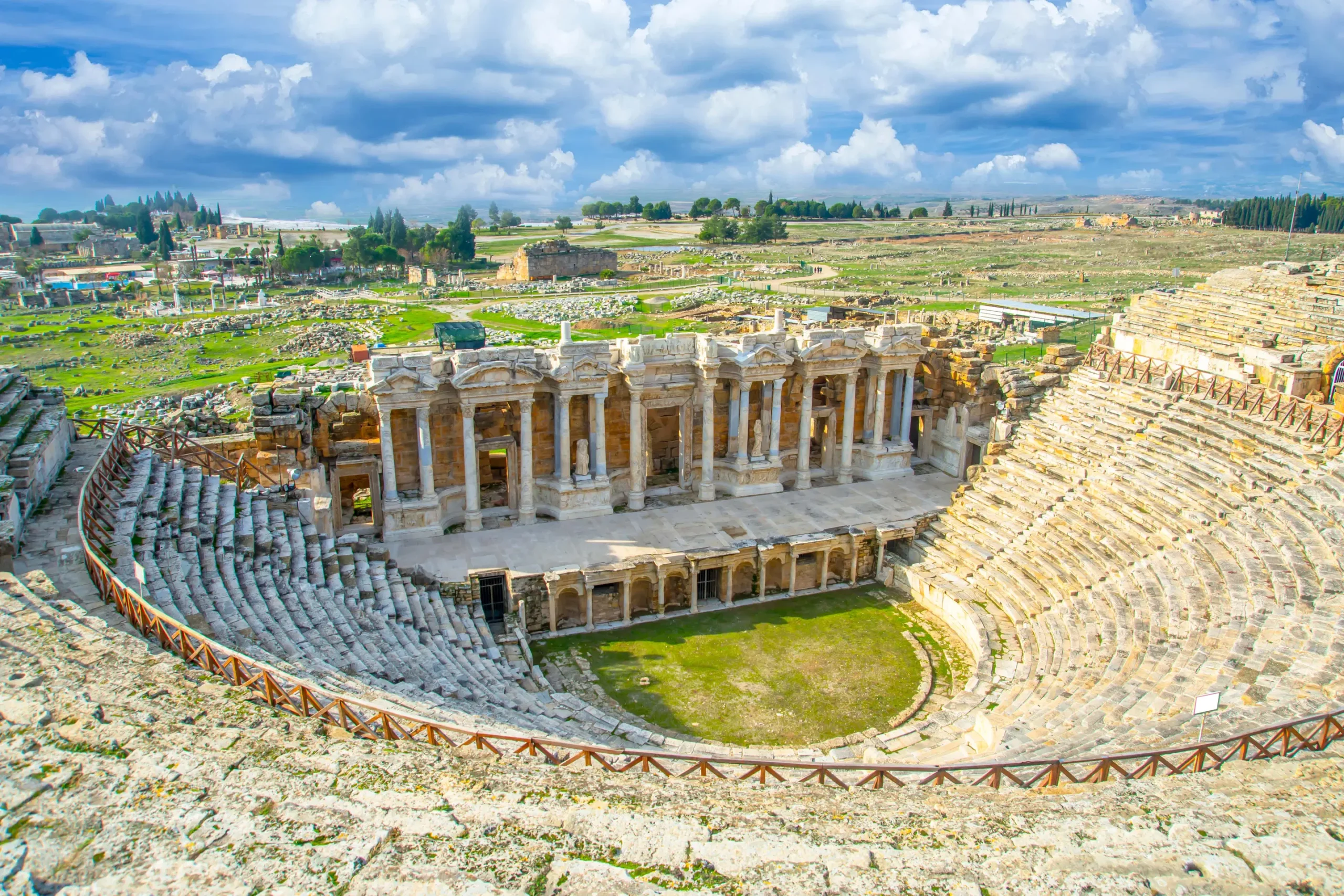
1) The Great Theatre of Hierapolis
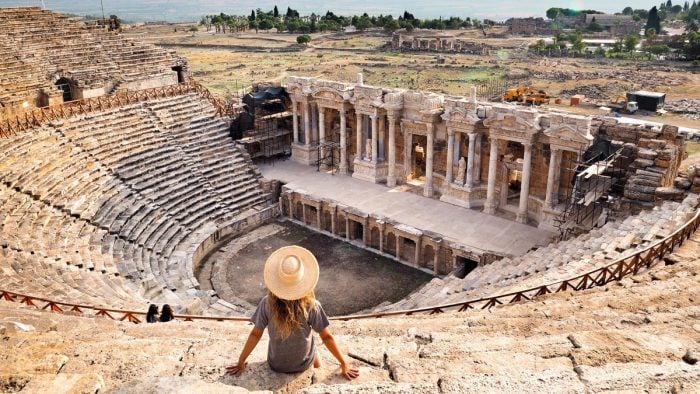
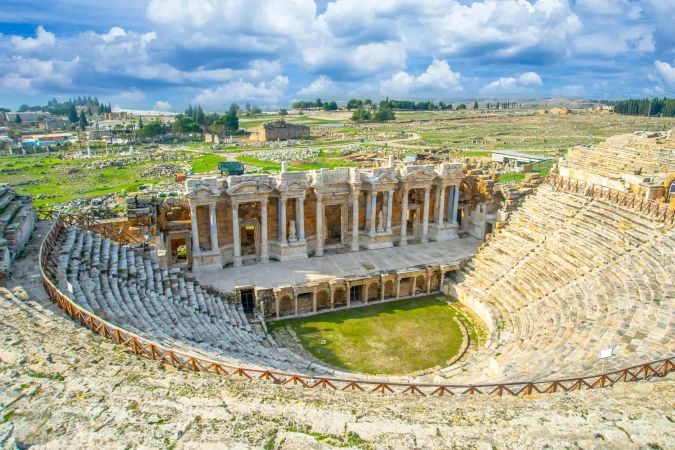
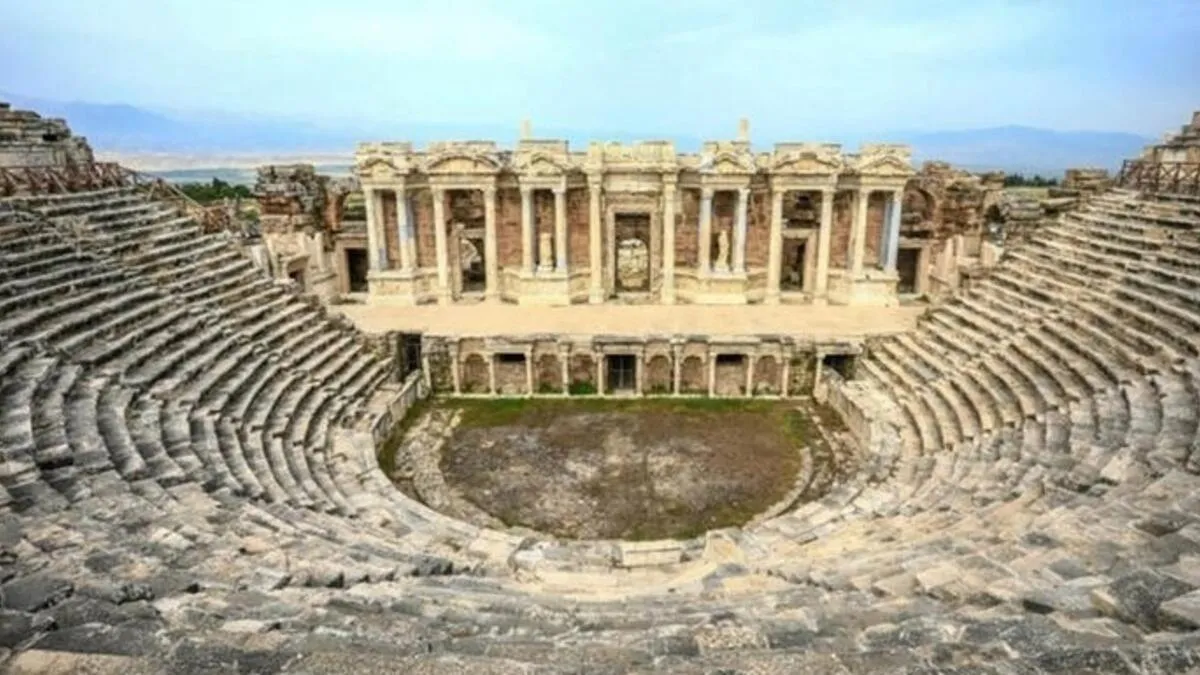
A crown of stone above the plateau. The theatre’s cavea (seating) looks onto a richly decorated scaenae frons (stage façade). Even from the upper rows you’ll see the travertine plateau glimmering in the distance. Golden-hour light makes the carvings pop.
2) Frontinus Gate, Colonnaded Street & Nymphaea
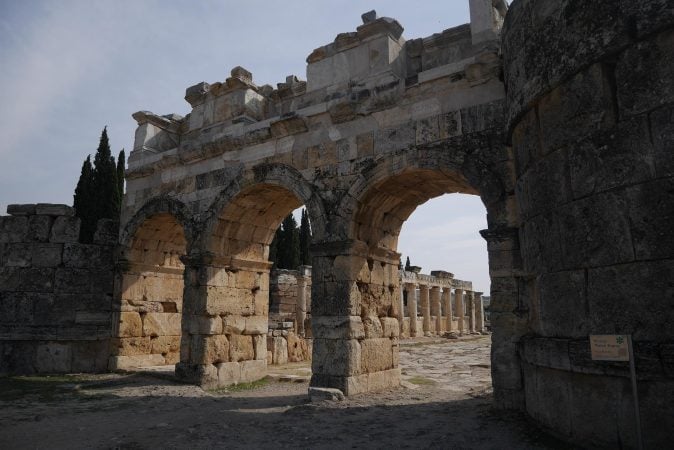
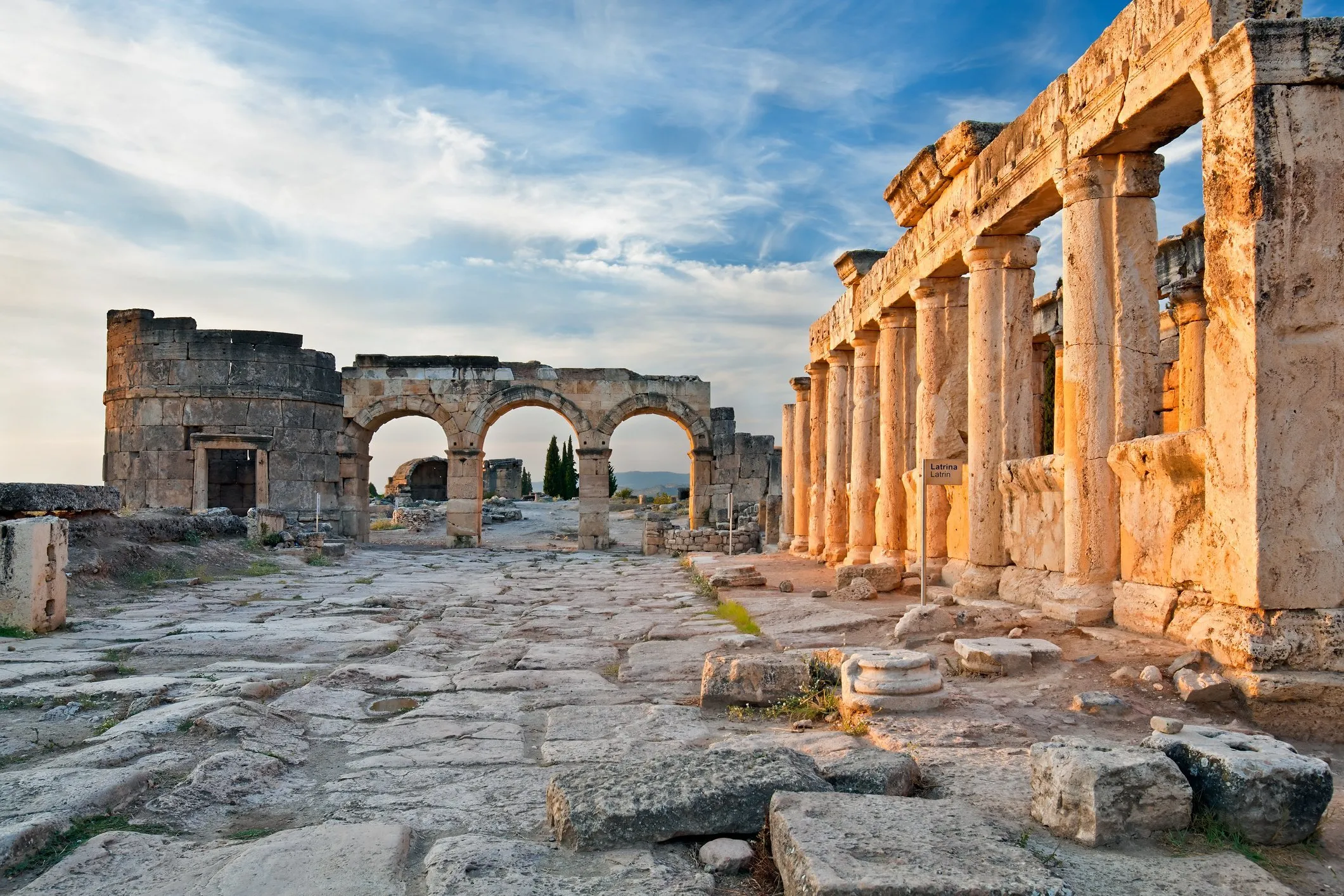
Enter a proper Roman city: a triple-arched gate leads to a broad avenue once lined with shops and civic buildings. Water monuments (nymphaea) celebrated the very springs that gave Hierapolis its reputation as a wellness center.
3) The Necropolis
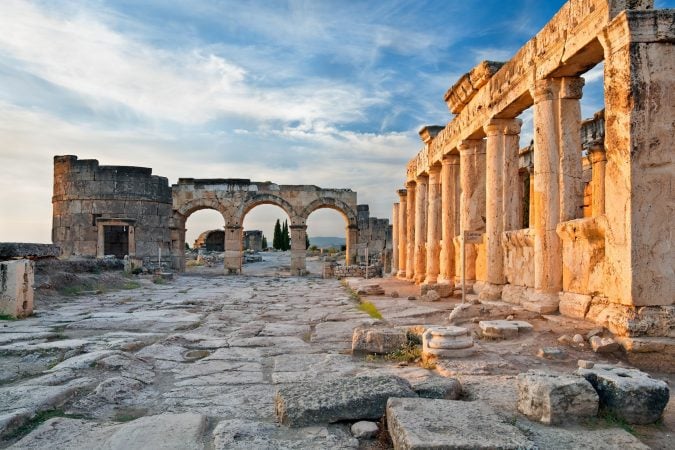
One of the largest in Anatolia. Rows of sarcophagi, tumuli, and funerary stelae stretch into the distance—somber, beautiful, and haunting at sunrise or late afternoon.
4) The Martyrium of St. Philip
Perched on a hill with panoramic views, this complex marks the veneration of the Apostle Philip and underlines Hierapolis’ religious importance in late antiquity.
5) Baths, Basilica & Museum Context
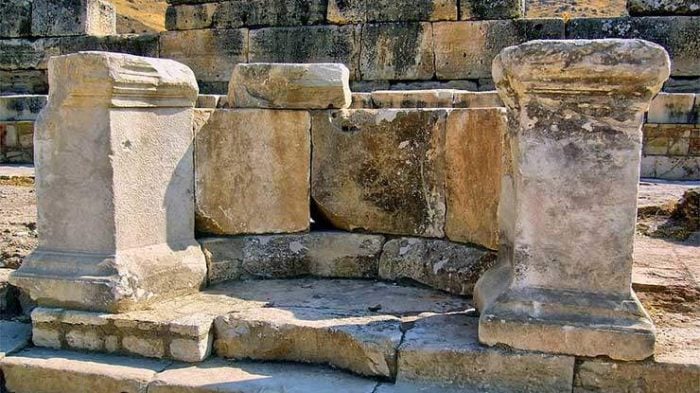
Baths and basilicas reflect how central water was to daily life. Many artifacts from Hierapolis are displayed locally, providing context for what you see on site.
6) Pamukkale Travertines (see below)
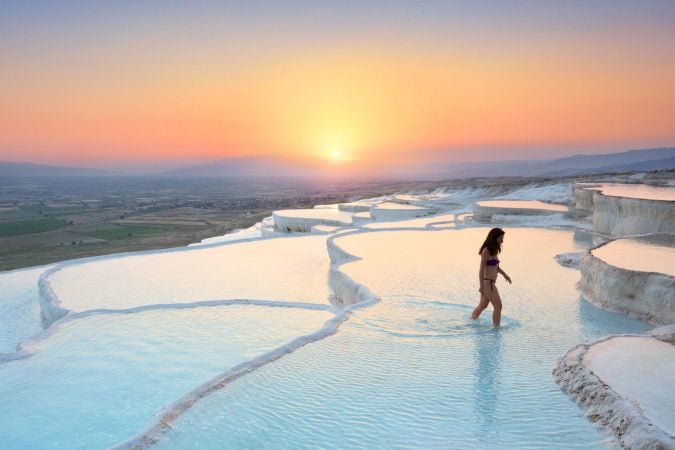
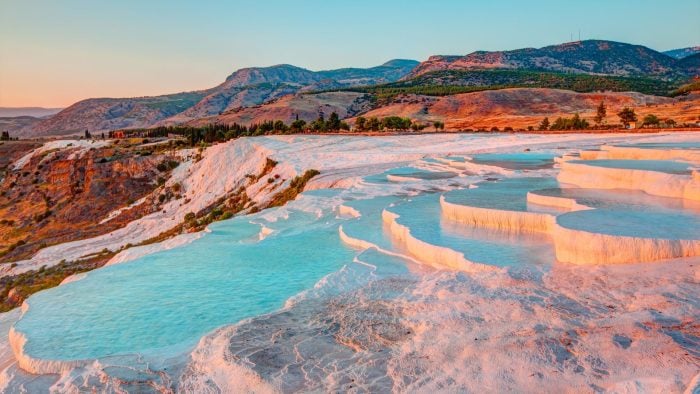
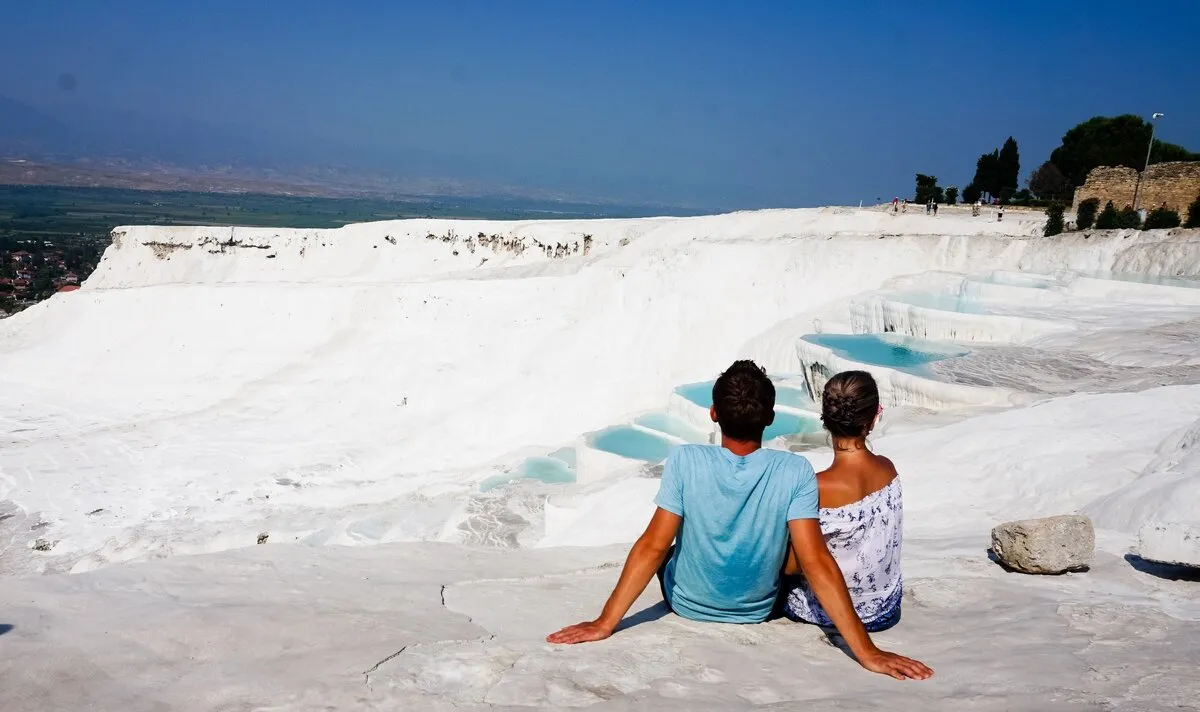
Don’t skip the descent onto Pamukkale’s sculpted white steps—nature’s amphitheater of terraces and shallow, glassy pools.
A Short History of Hierapolis
Founded in the Hellenistic era and associated with the Attalid kings of Pergamon,
Hierapolis grew into a Roman spa city celebrated for its healing waters. Earthquakes reshaped it many times; rebuilding left layers from Roman, Byzantine, and later periods. The city long held sacred status—its name can be read as “Holy City”—owing to its thermal springs and extensive cults. In late antiquity, Hierapolis became a bishopric; religious structures like the Martyrium of St. Philip attest to its Christian importance.
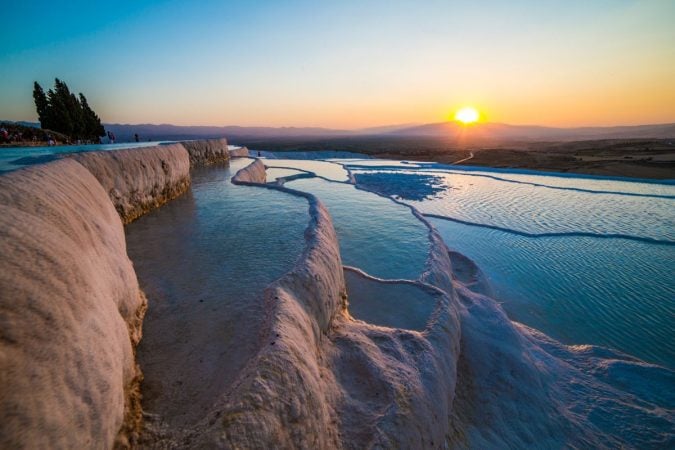
As centuries passed and tremors took their toll, much of the settlement slumbered. Excavation and conservation have revived the plan: gates and avenues, baths and fountains, theatres and tombs—framed by the timeless cascade of Pamukkale’s terraces below.
Pamukkale Travertines & Cleopatra’s Pool
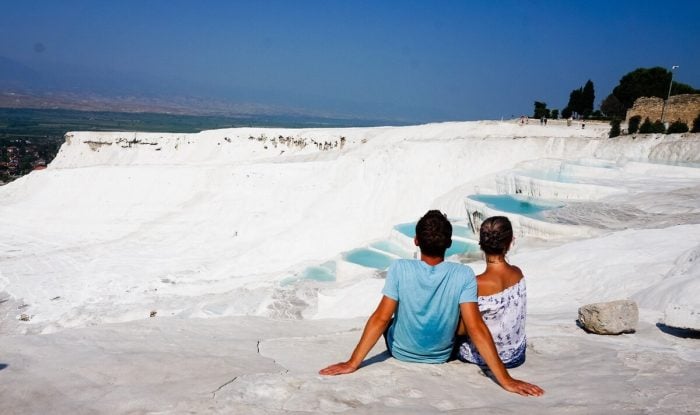
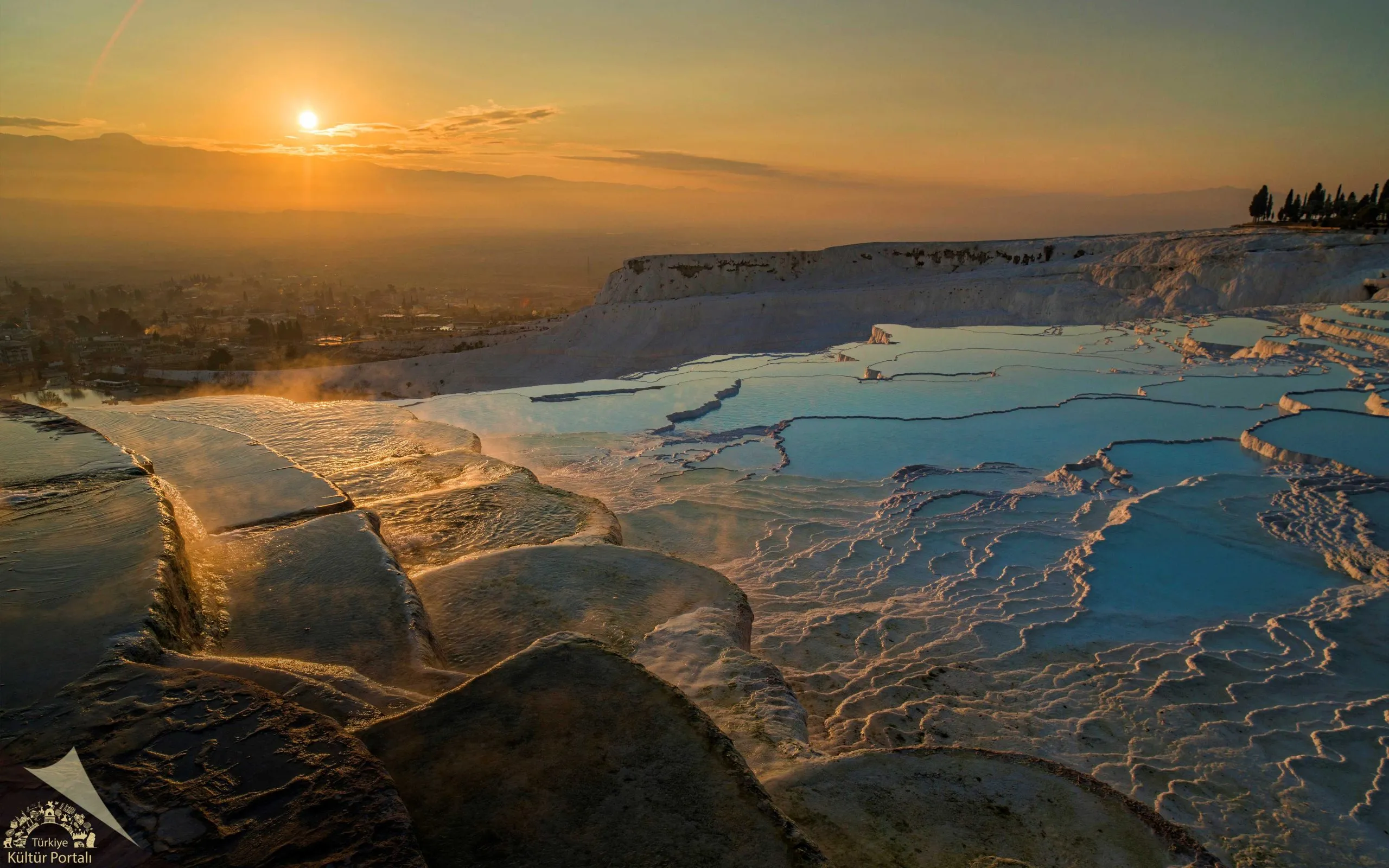
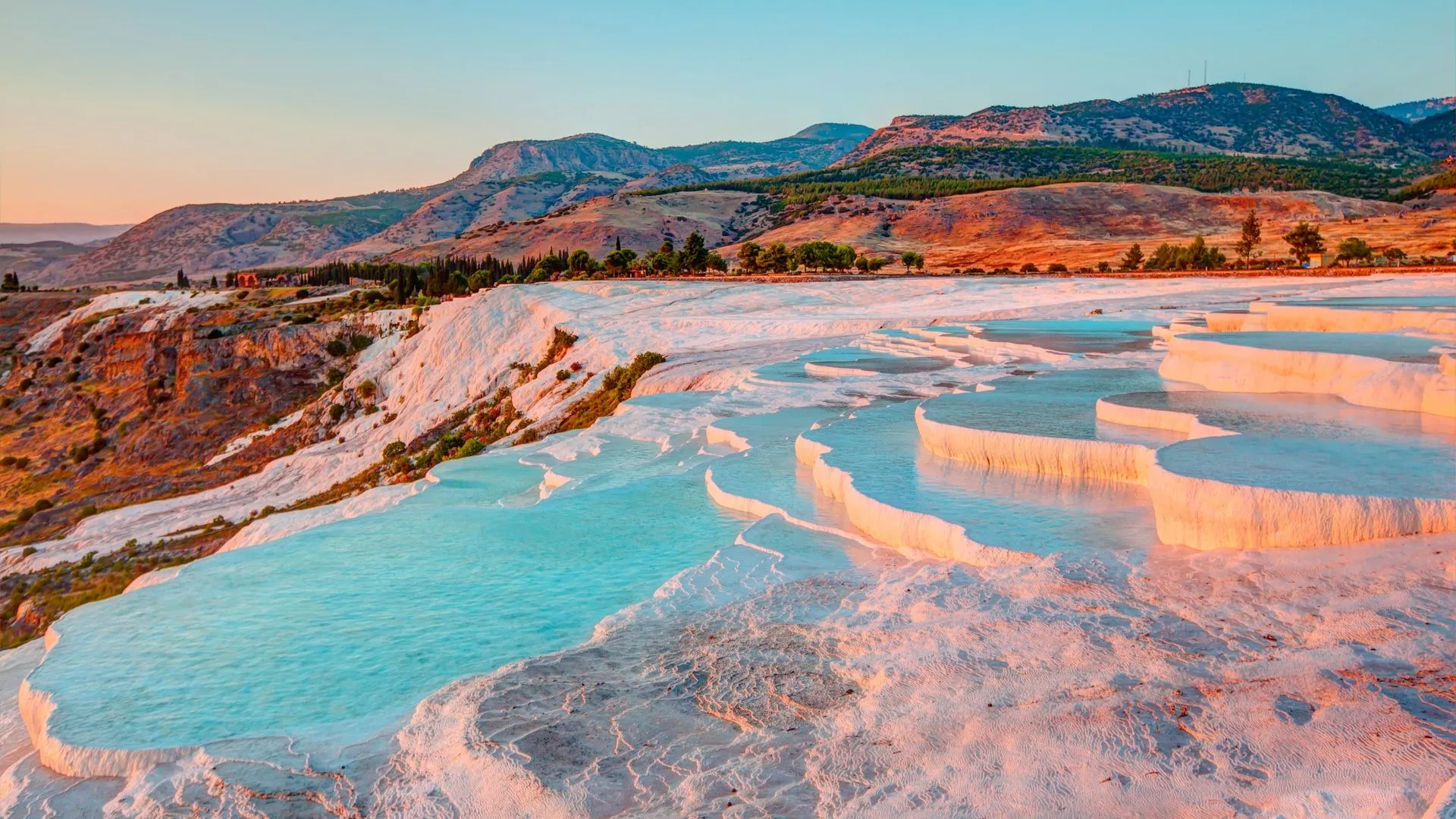
Pamukkale is a living geology lesson. Thermo-mineral waters emerge saturated with calcium; upon cooling and degassing, they deposit travertine—creating the terraced steps that made Pamukkale famous. The result: sculpted white forms and turquoise pools you can wade in along designated paths.
How to Experience the Terraces
- Barefoot only: To protect the formations, footwear is not allowed on the travertines. Wear easily removable shoes and carry them along.
- Stay on marked routes: Help preserve the delicate calcite. The color and clarity you came to see depend on it.
- Pack light: Small daypack, water, hat, sunglasses, and sun protection—even in shoulder seasons.
Cleopatra’s Antique Pool (Sacred Thermal Pool)
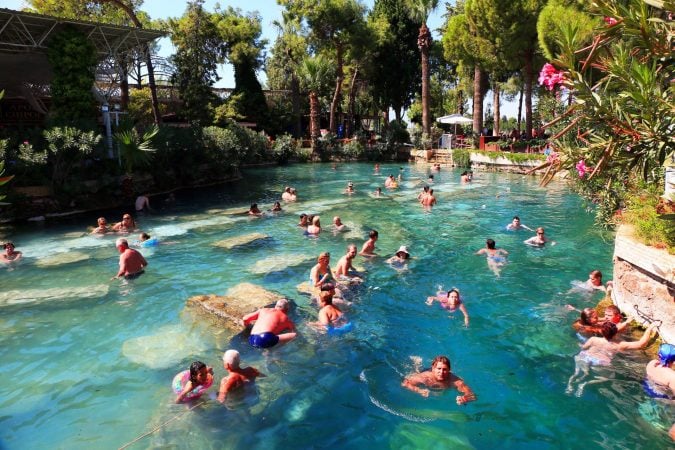
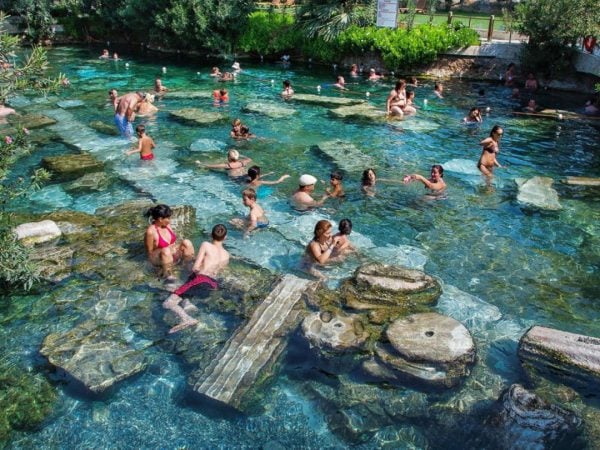
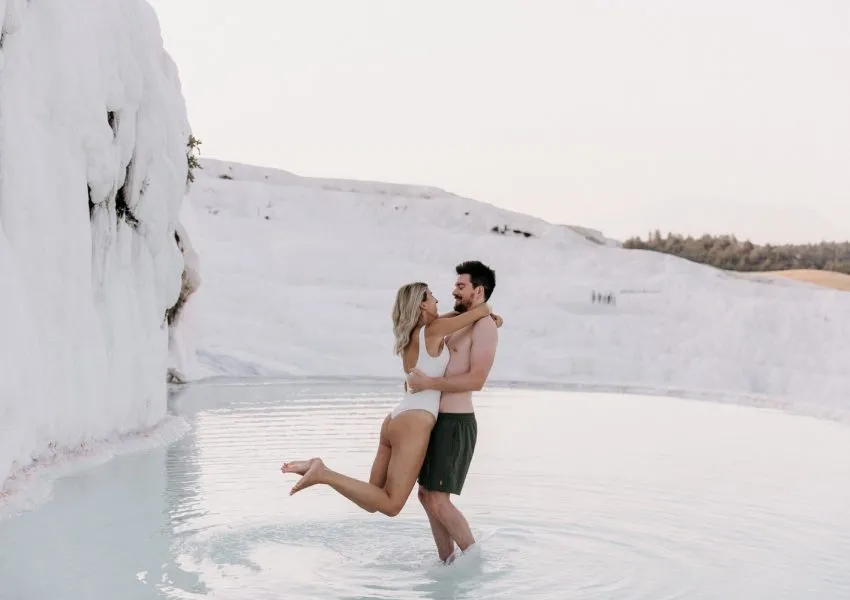
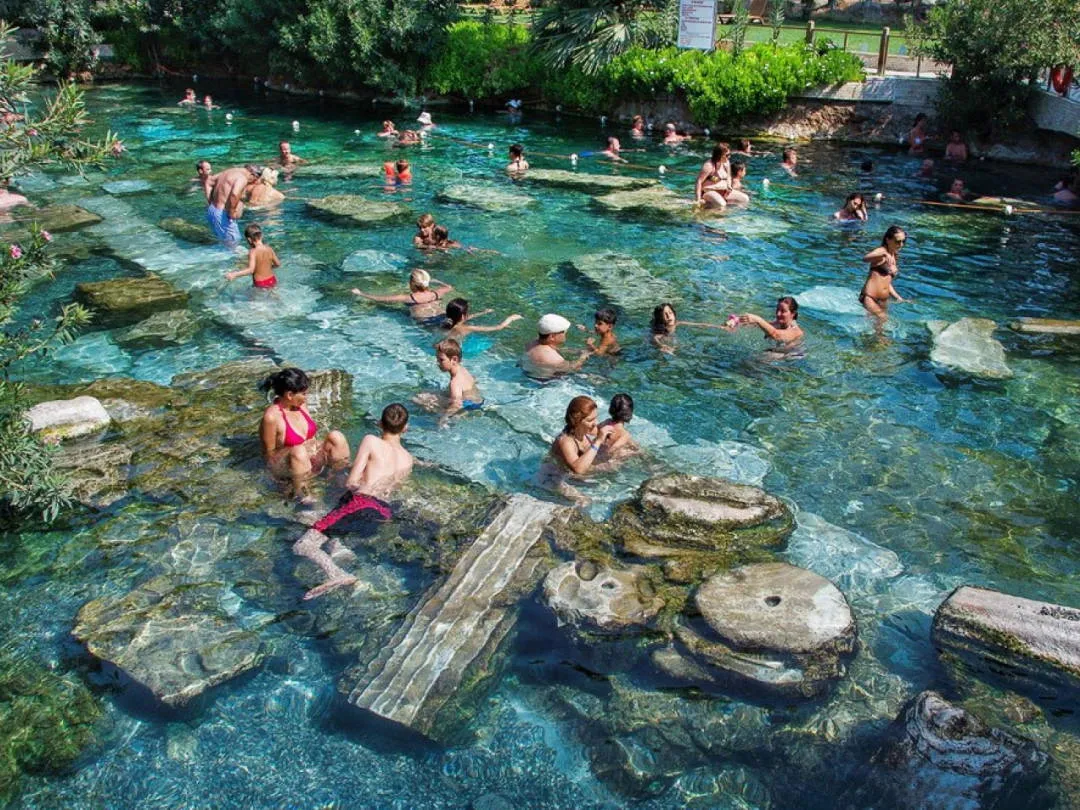
A warm, mineral-rich pool where toppled columns lie beneath the surface. It’s a soothing immersion after walking the site. Bring a swimsuit and a small towel; lockers and facilities are available on-site. For travelers with limited time who want it all in a day (terraces, Hierapolis, Antique Pool, transfers), consider a guided
Pamukkale Day Tour from Antalya or a compact
Pamukkale Hotels departure.
Pamukkale Hot Air Balloon Experience
Yes—Pamukkale also offers
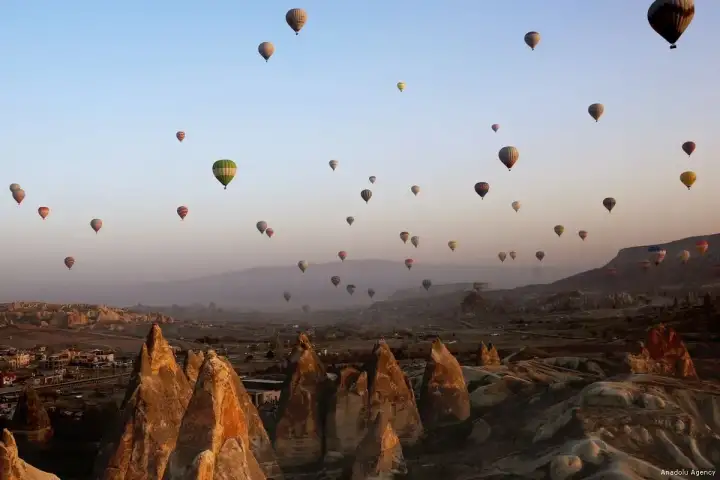
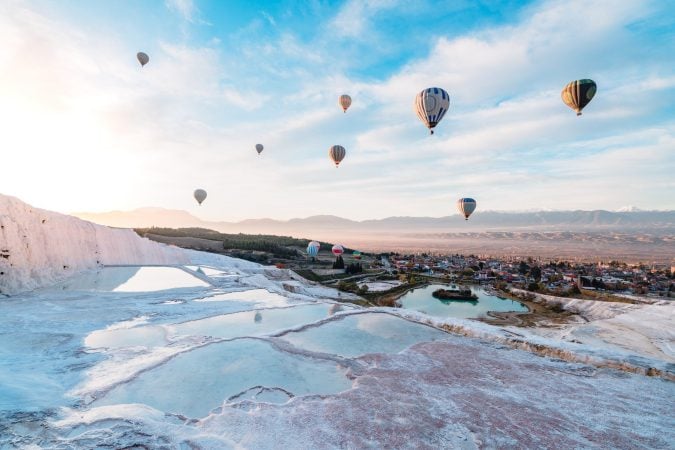
hot air balloon flights (weather permitting). Imagine sunrise light catching the white shelves of travertine while you float over the valley, then touch down near ancient ruins. It’s a different perspective on a world-famous landscape. See details and availability here:
Pamukkale Hot Air Balloon Flight.
How to Visit Pamukkale & Hierapolis
While you can self-navigate, distances in Western Turkey often make guided day trips the most efficient. Here are the smartest approaches from key hubs, with
hand-picked options:
From Istanbul (fastest for first-timers)
Fly to Denizli, transfer to the site, and return the same evening—or stay overnight if you’d like a slower pace. The logistics are painless with a guided option like the
Pamukkale Day Trip from Istanbul.
From Kuşadası or Selçuk (Ephesus region)
Base yourself near the Aegean and day-trip inland for terraces and ruins: try
Pamukkale Day Tour from Kuşadası & Selçuk. It pairs naturally with an Ephesus day.
From İzmir Hotels
A straightforward departure from Turkey’s Aegean capital:
Pamukkale Tour from İzmir Hotels.
From Antalya (or transiting Antalya → Kuşadası)
If you’re on the Mediterranean coast, go inland for a day—or use Pamukkale as a connective highlight en route:
Pamukkale Day Tour from Antalya or
Antalya to Kuşadası via Pamukkale.
From Cappadocia (long but do-able)
For travelers crossing the country, there’s a long-view corridor linking Turkey’s two surreal landscapes:
Pamukkale Long Day Tour from Cappadocia.
Already in Denizli or Pamukkale
Landing at the local airport or staying near the site? Let a short transfer maximize your time:
From Denizli/Pamukkale Airport or
From Pamukkale Hotels. Prefer total control over pace and photography windows? Browse
Pamukkale Private Tours.
Suggested Itineraries: Half-Day to Multi-Day
Express Half-Day (if you’re already staying near the site)
- Enter from the upper gate near Hierapolis
- Walk the theatre, Frontinus Gate, and the necropolis loop
- Finish with Pamukkale terraces and a brief soak in Cleopatra’s Pool
Short stays pair well with a local departure:
Pamukkale Hotels tour.
Classic One-Day (most popular)
- Morning: Hierapolis highlights (theatre, colonnaded street, baths, Martyrium views)
- Midday: Lunch & museum context
- Afternoon: Travertines barefoot walk + Antique Pool swim
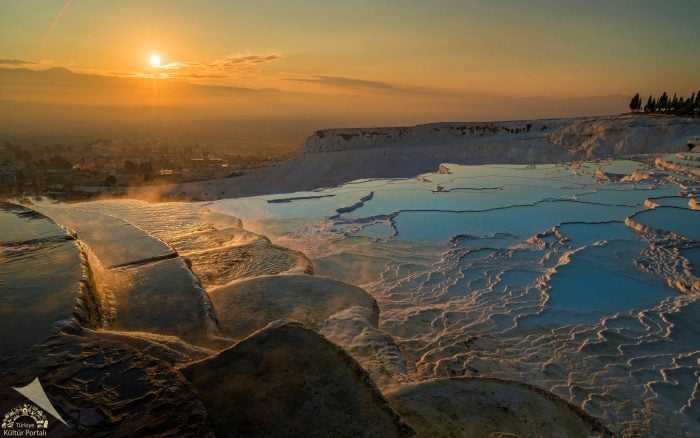
- Sunset: Photo session from terraces (soft, warm light)
Templates:
from Istanbul,
from Kuşadası/Selçuk,
from İzmir,
from Antalya.
Slow & Scenic Two-Day
Transit Itinerary (Antalya → Kuşadası via Pamukkale)
Cross-Turkey Odyssey (Cappadocia → Pamukkale)
Photography Guide & Best Times
Sunrise on the travertines offers soft sky pastels and fewer crowds.
Late afternoon to sunset warms the stone into cream and gold; the theatre reliefs look their best with angled light. Blue hour on the terraces is gorgeous for tripod shots.
Lenses & Angles
- Wide (14–24/16–35mm): sweeping terraces, theatre interiors, city plan
- Normal/Zoom (24–70mm): portraits and environmental details
- Tele (70–200mm): compress terraces, pick out reliefs, isolate sarcophagi
Composition Ideas
- Use terraced curves as leading lines
- Frame arches and portals for depth
- Balance human scale (barefoot silhouettes) with sweeping white shelves
Etiquette, Accessibility & Practical Tips
- Protect the site: Walk only where permitted; no climbing on fragile edges; barefoot on designated travertine paths.
- What to wear: Easy-on/off footwear for terrace entry, breathable layers, hat/sunscreen.
- Bring: Water, small towel (for Antique Pool), minimal valuables.
- Seniors & families: Distances are moderate; plan breaks. Strollers may be difficult on uneven stone—consider a carrier.
- Seasonal notes: Summer heat demands midday shade; winter can be crisp and photogenic.
Combining Pamukkale with Ephesus
Pamukkale pairs naturally with the Aegean’s greatest archaeological star,
Ephesus. If you’re staging from İzmir or Kuşadası/Selçuk, build an unforgettable two-center. See curated combos here:
Ephesus & Pamukkale Tours.
Plan & Book: Editor’s Picks
 From the sacred springs of Hierapolis to the shimmering shelves of Pamukkale, this is Turkey at its most otherworldly. Walk the white steps, soak in antique waters, and let a Roman city teach you how timeless a landscape can be.
 Unlike many archaeological sites, Hierapolis lives in the present: bath complexes, colonnaded streets, gates, temples, a vast necropolis, and an astonishing theatre are linked by easy footpaths. In one day you can contrast warm, barefoot steps in Pamukkale’s pools with the cool stone of a Roman stage where emperors once watched performances. Want a guided, no-stress day? Explore curated programs while you read: Pamukkale Day Trip from Istanbul, From Kuşadası & Selçuk, From İzmir Hotels.
 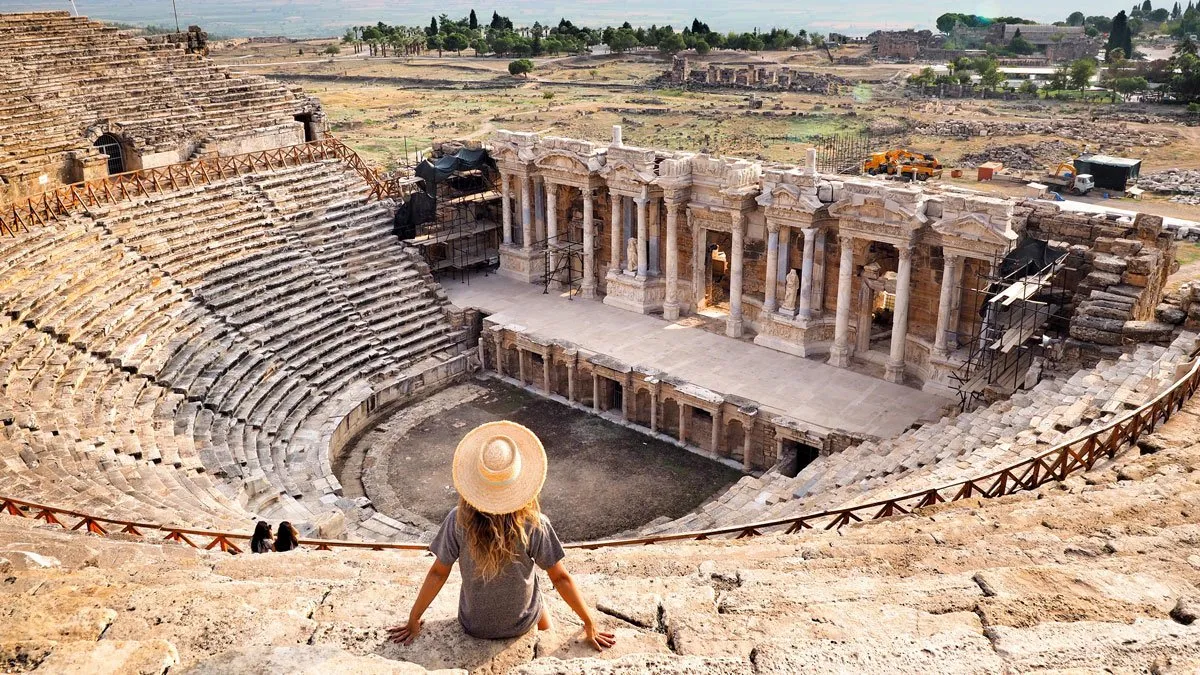 A crown of stone above the plateau. The theatre’s cavea (seating) looks onto a richly decorated scaenae frons (stage façade). Even from the upper rows you’ll see the travertine plateau glimmering in the distance. Golden-hour light makes the carvings pop.
 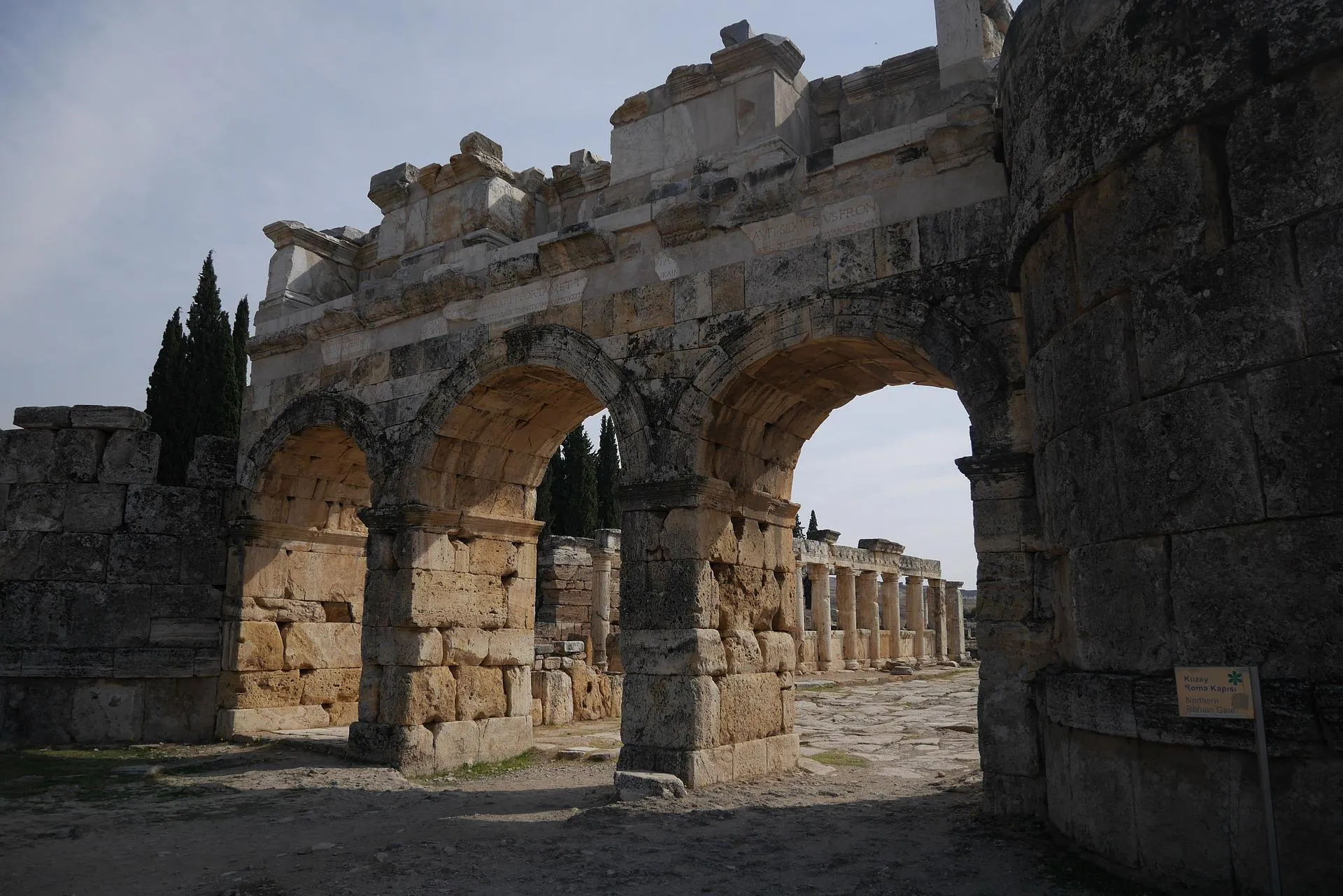 Enter a proper Roman city: a triple-arched gate leads to a broad avenue once lined with shops and civic buildings. Water monuments (nymphaea) celebrated the very springs that gave Hierapolis its reputation as a wellness center.
  One of the largest in Anatolia. Rows of sarcophagi, tumuli, and funerary stelae stretch into the distance—somber, beautiful, and haunting at sunrise or late afternoon.
  Perched on a hill with panoramic views, this complex marks the veneration of the Apostle Philip and underlines Hierapolis’ religious importance in late antiquity.
 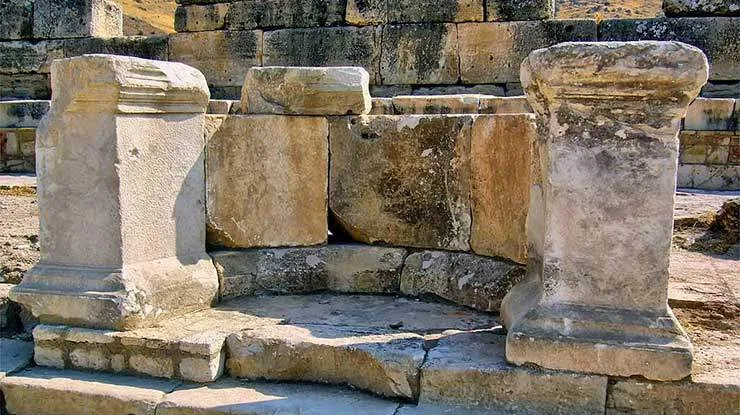 Baths and basilicas reflect how central water was to daily life. Many artifacts from Hierapolis are displayed locally, providing context for what you see on site.
 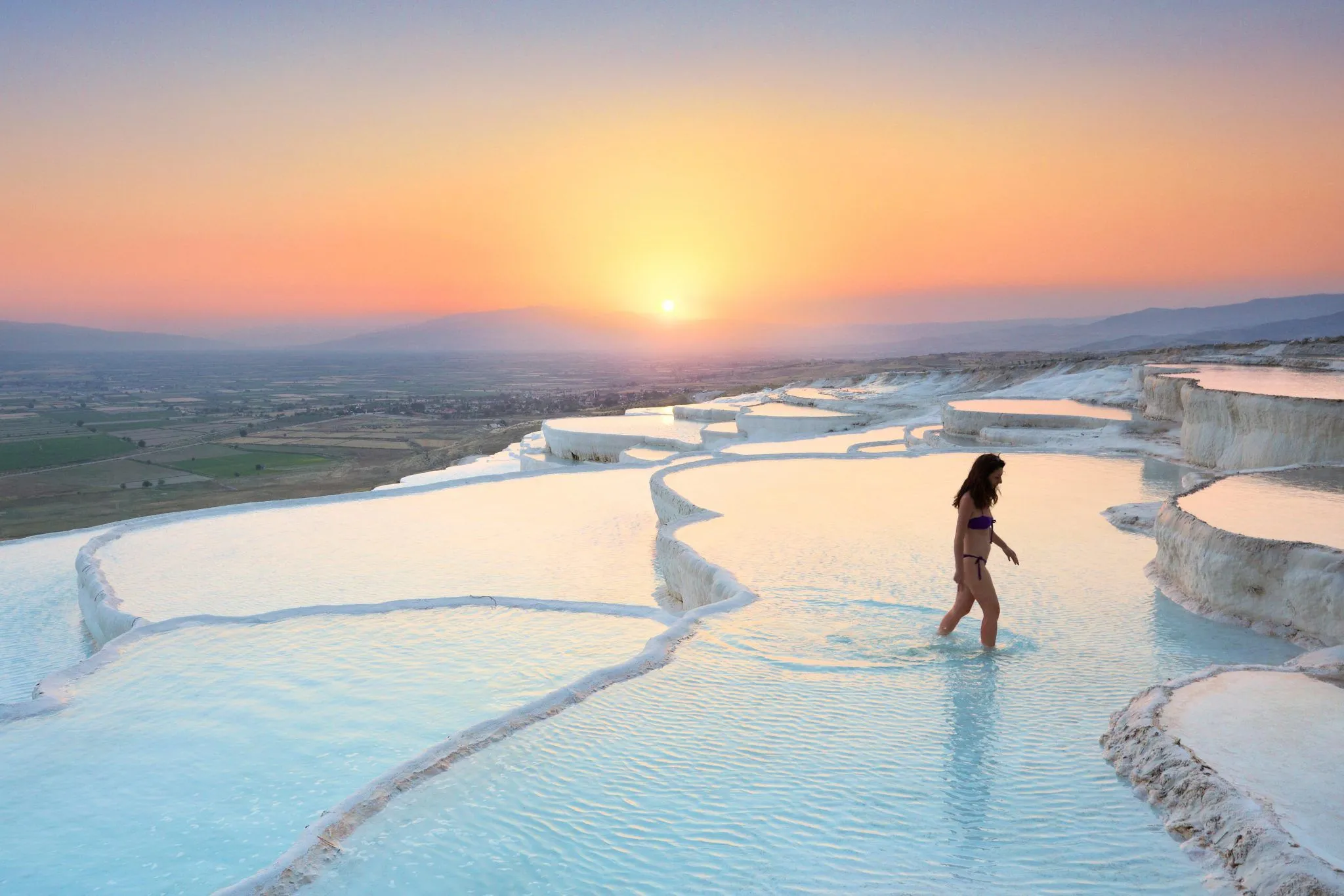 Don’t skip the descent onto Pamukkale’s sculpted white steps—nature’s amphitheater of terraces and shallow, glassy pools.
 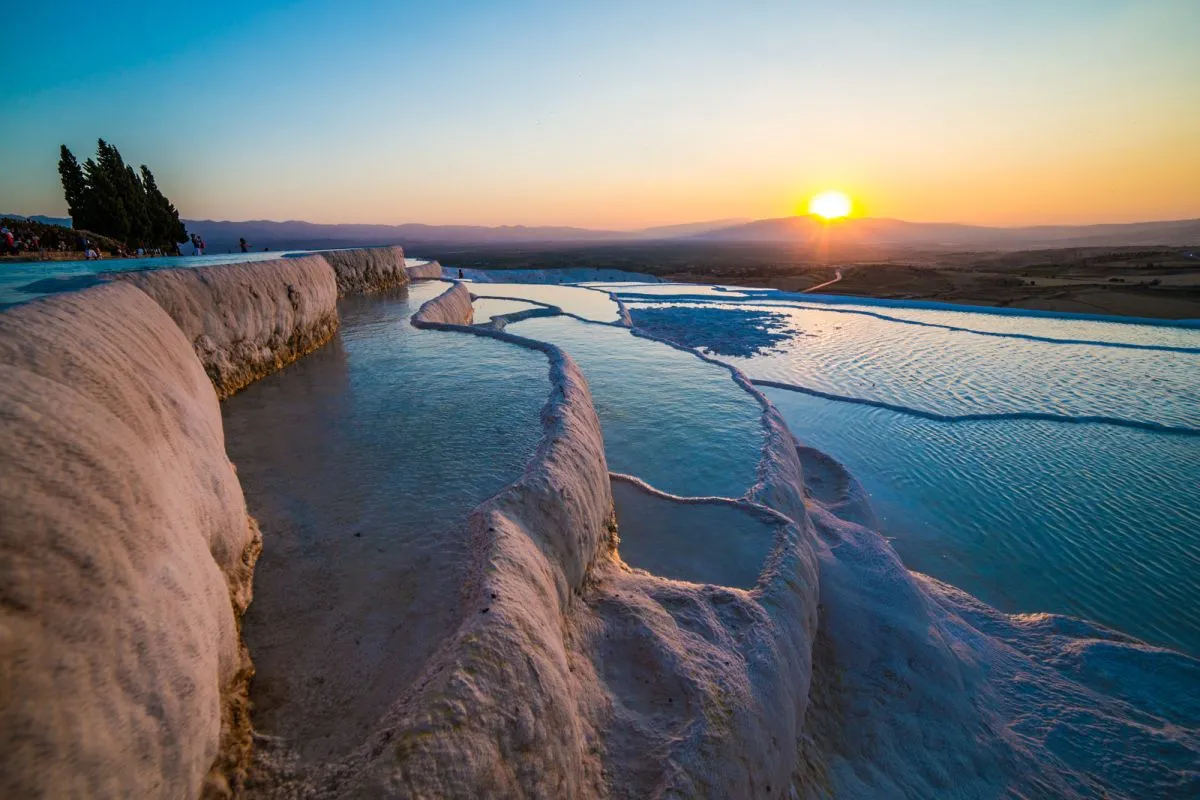 As centuries passed and tremors took their toll, much of the settlement slumbered. Excavation and conservation have revived the plan: gates and avenues, baths and fountains, theatres and tombs—framed by the timeless cascade of Pamukkale’s terraces below.
 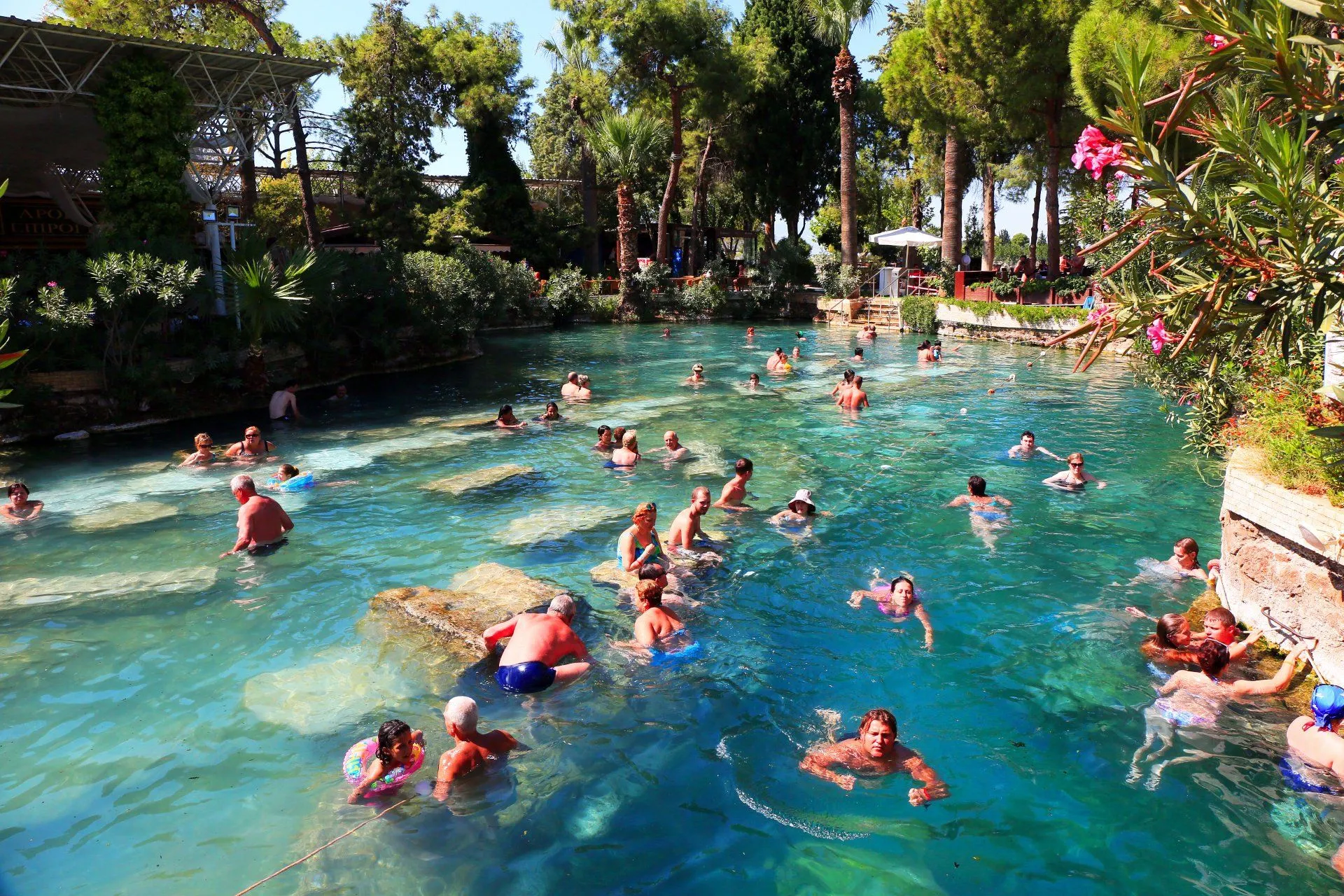 A warm, mineral-rich pool where toppled columns lie beneath the surface. It’s a soothing immersion after walking the site. Bring a swimsuit and a small towel; lockers and facilities are available on-site. For travelers with limited time who want it all in a day (terraces, Hierapolis, Antique Pool, transfers), consider a guided Pamukkale Day Tour from Antalya or a compact Pamukkale Hotels departure.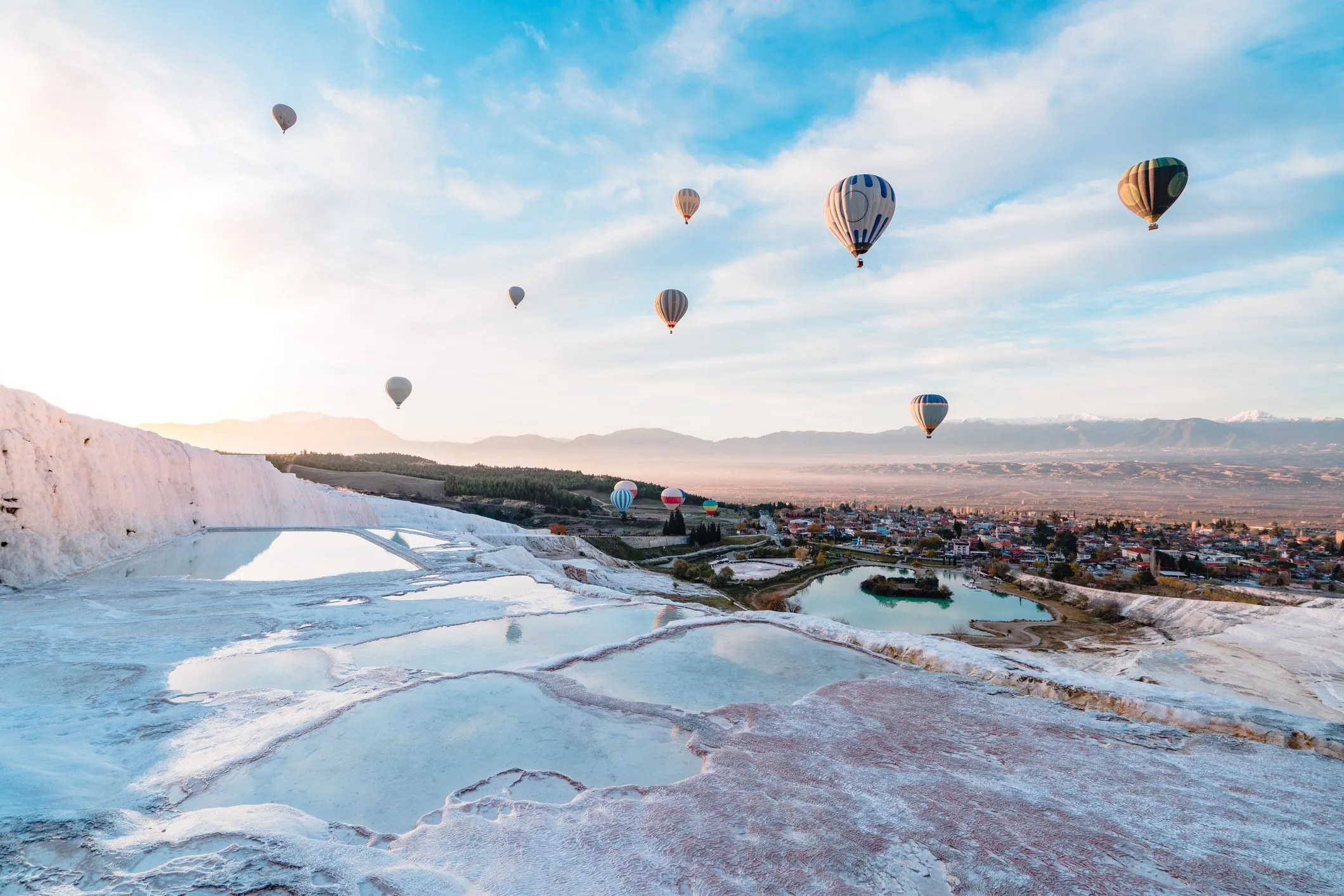
 From the sacred springs of Hierapolis to the shimmering shelves of Pamukkale, this is Turkey at its most otherworldly. Walk the white steps, soak in antique waters, and let a Roman city teach you how timeless a landscape can be.